
Improving Worldmark Owner Engagement and Retention
Improving Worldmark Owner Engagement and Retention
Company
Travel + Leisure Co.
Role
UX Design Intern
Timeline
Summer 2025
Tools
Figma
PROJECT
PROJECT
Reimaging how the website could better inspire users to travel
Reimaging how the website could better inspire users to travel
During my 12-week UX Design internship at Travel + Leisure, whose mission is to put the world on vacation, I worked on a project focused on improving how the website inspires users during the discovery phase of travel planning.
I conducted competitive and heuristic research to evaluate the site’s strengths and weaknesses, identified key opportunities to improve engagement, and proposed design solutions and features aimed at making destinations more discoverable, personalized, and motivating for users.
During my 12-week UX Design internship at Travel + Leisure, whose mission is to put the world on vacation, I worked on a project focused on improving how the website inspires users during the discovery phase of travel planning.
I conducted competitive and heuristic research to evaluate the site’s strengths and weaknesses, identified key opportunities to improve engagement, and proposed design solutions and features aimed at making destinations more discoverable, personalized, and motivating for users.
PROBLEM #1
PROBLEM #1
Region-based search relies on assumed geographic knowledge
Region-based search relies on assumed geographic knowledge
Users must know which “region” a destination belongs to in order to search successfully (e.g., whether Orlando is in Central or South Florida).
This reliance on assumed geographic knowledge creates confusion, particularly for international users and first-time visitors.
Users must know which “region” a destination belongs to in order to search successfully (e.g., whether Orlando is in Central or South Florida).
This reliance on assumed geographic knowledge creates confusion, particularly for international users and first-time visitors.
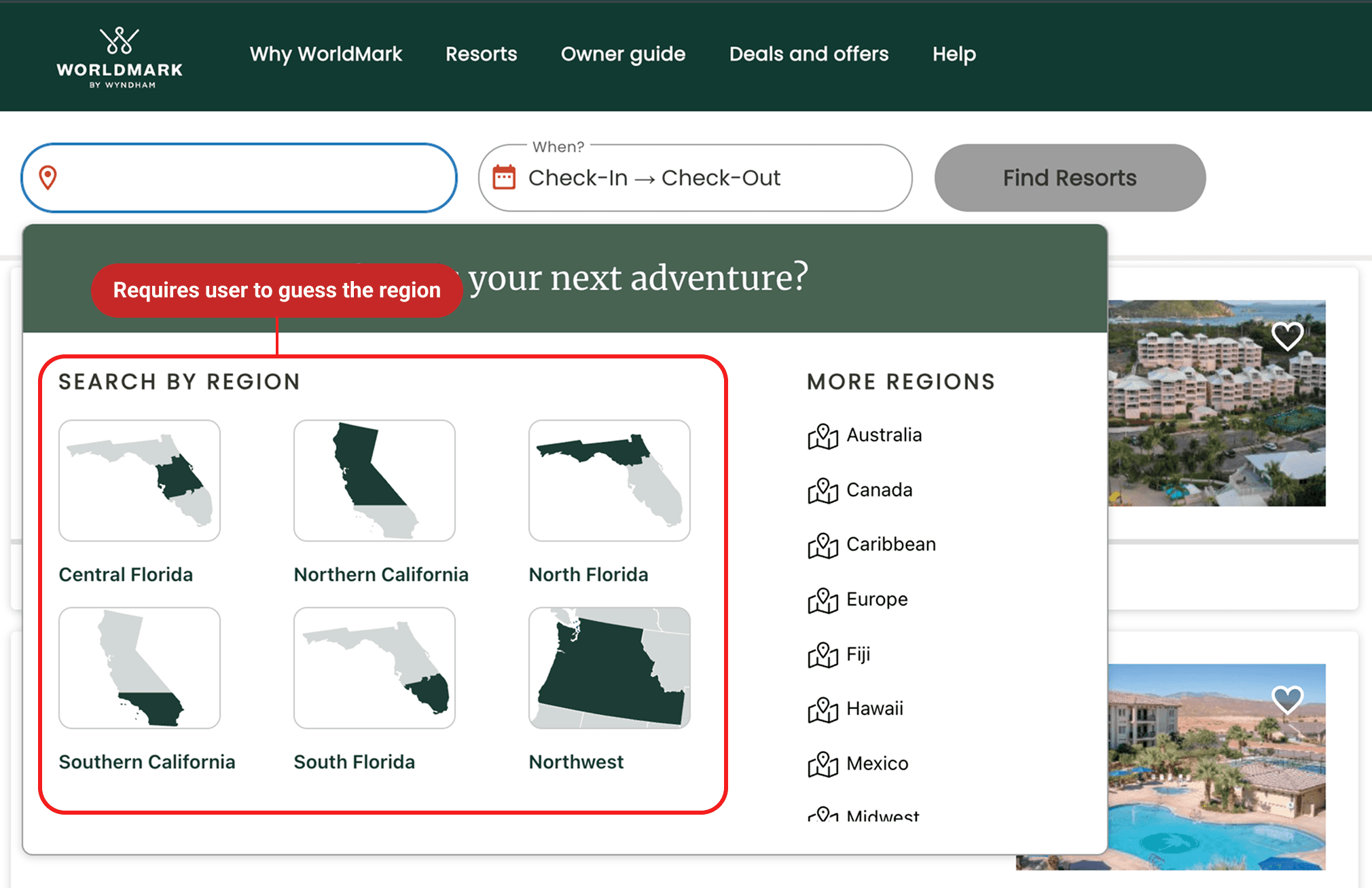
Original Screen
How might we present all WorldMark destination countries and cities on a single screen in a way that is clear and easy for owners to navigate?
SOLUTION
SOLUTION
Shifting from region-based search to destination-first discovery
Shifting from region-based search to destination-first discovery
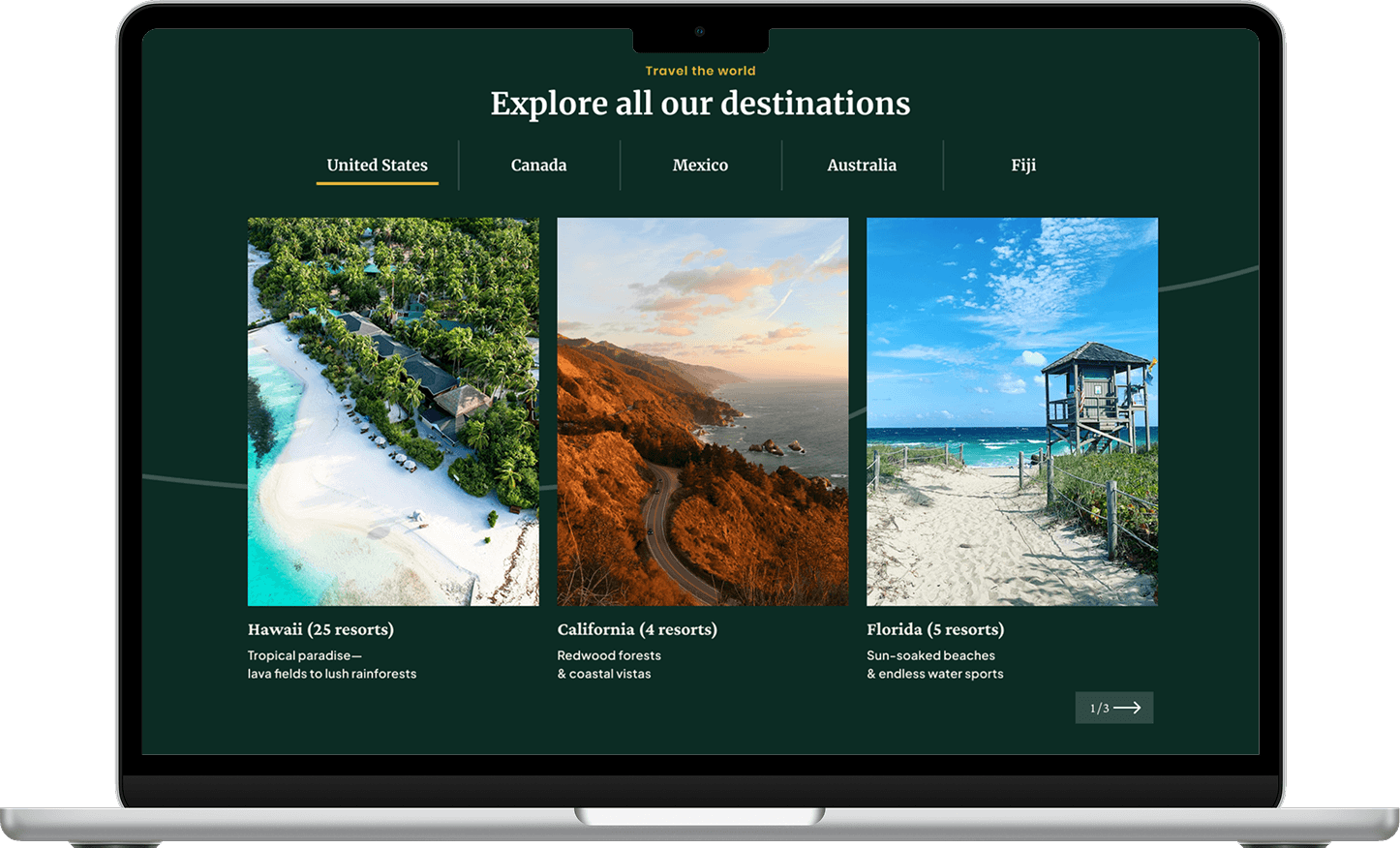
To remove the reliance on geographic assumptions and improve discoverability, I redesigned the landing experience to make destinations accessible without requiring regional knowledge. The new approach focuses on:
Organizing destinations by country and city removes the need for users to guess the region.
Highlighting the number of resorts available in each location sets clear user expectations.
Simplifying the visual hierarchy so users can quickly scan and locate their desired destination.
Using clear, descriptive labels to improve accessibility and reduce ambiguity.
To remove the reliance on geographic assumptions and improve discoverability, I redesigned the landing experience to make destinations accessible without requiring regional knowledge. The new approach focuses on:
Organizing destinations by country and city removes the need for users to guess the region.
Highlighting the number of resorts available in each location sets clear user expectations.
Simplifying the visual hierarchy so users can quickly scan and locate their desired destination.
Using clear, descriptive labels to improve accessibility and reduce ambiguity.
Redesign
PROBLEM #2
PROBLEM #2
Lack of personalization makes it harder for users to find their dream destination
Lack of personalization makes it harder for users to find their dream destination
Credits are visible but not actionable. Users have no clear guidance on which resorts can be booked with their available credits.
Recent searches are only displayed when the user clicks the input field making it difficult for users to be inspired since there is not imagery to invoke interest in a destination.
Credits are visible but not actionable. Users have no clear guidance on which resorts can be booked with their available credits.
Recent searches are only displayed when the user clicks the input field making it difficult for users to be inspired since there is not imagery to invoke interest in a destination.
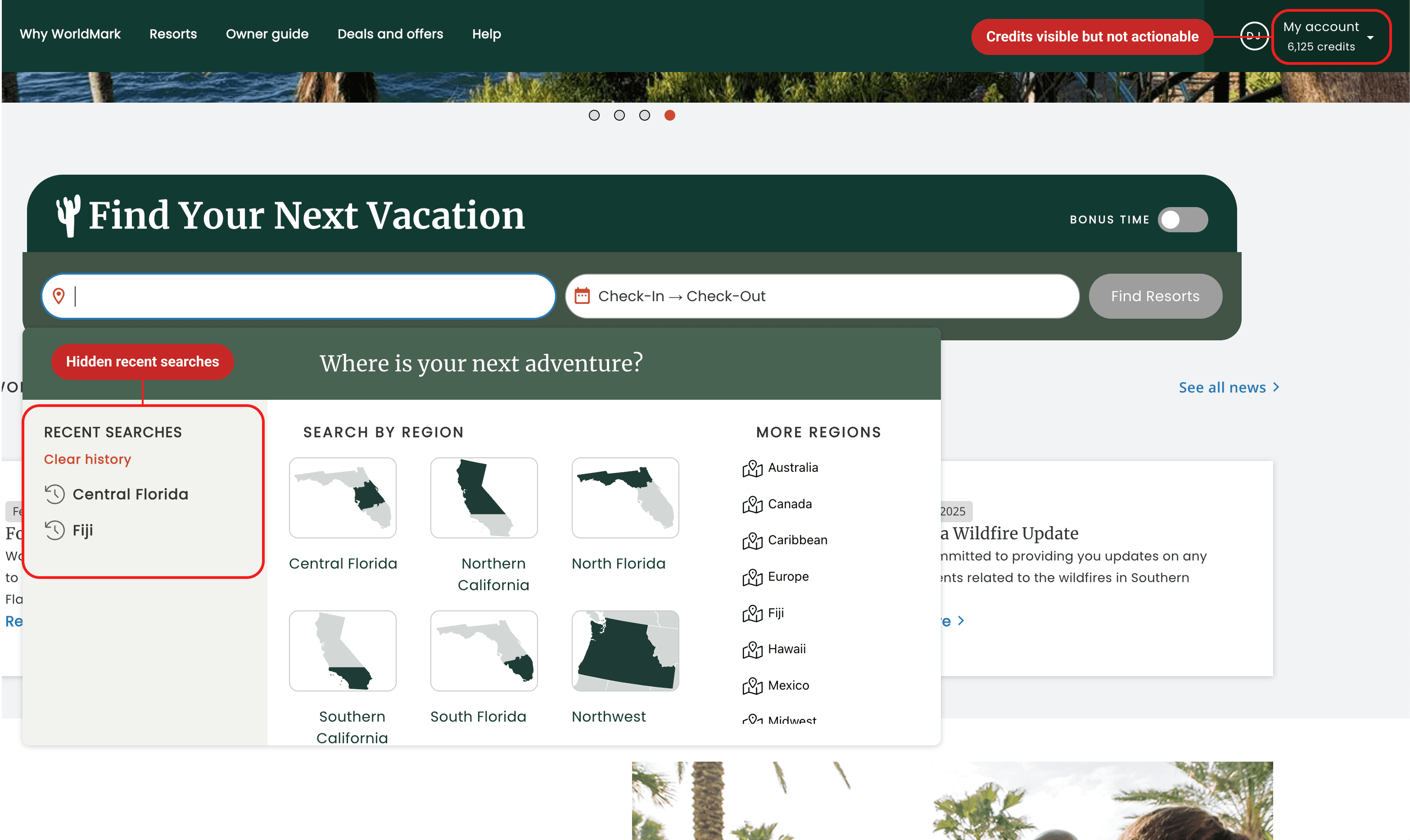
Original screen
How might we personalize the discovery experience so owners can easily identify destinations they can book with their available credits to plan their next trip?
SOLUTION
SOLUTION
Guiding users to their next trip through personalized recommendations
Guiding users to their next trip through personalized recommendations
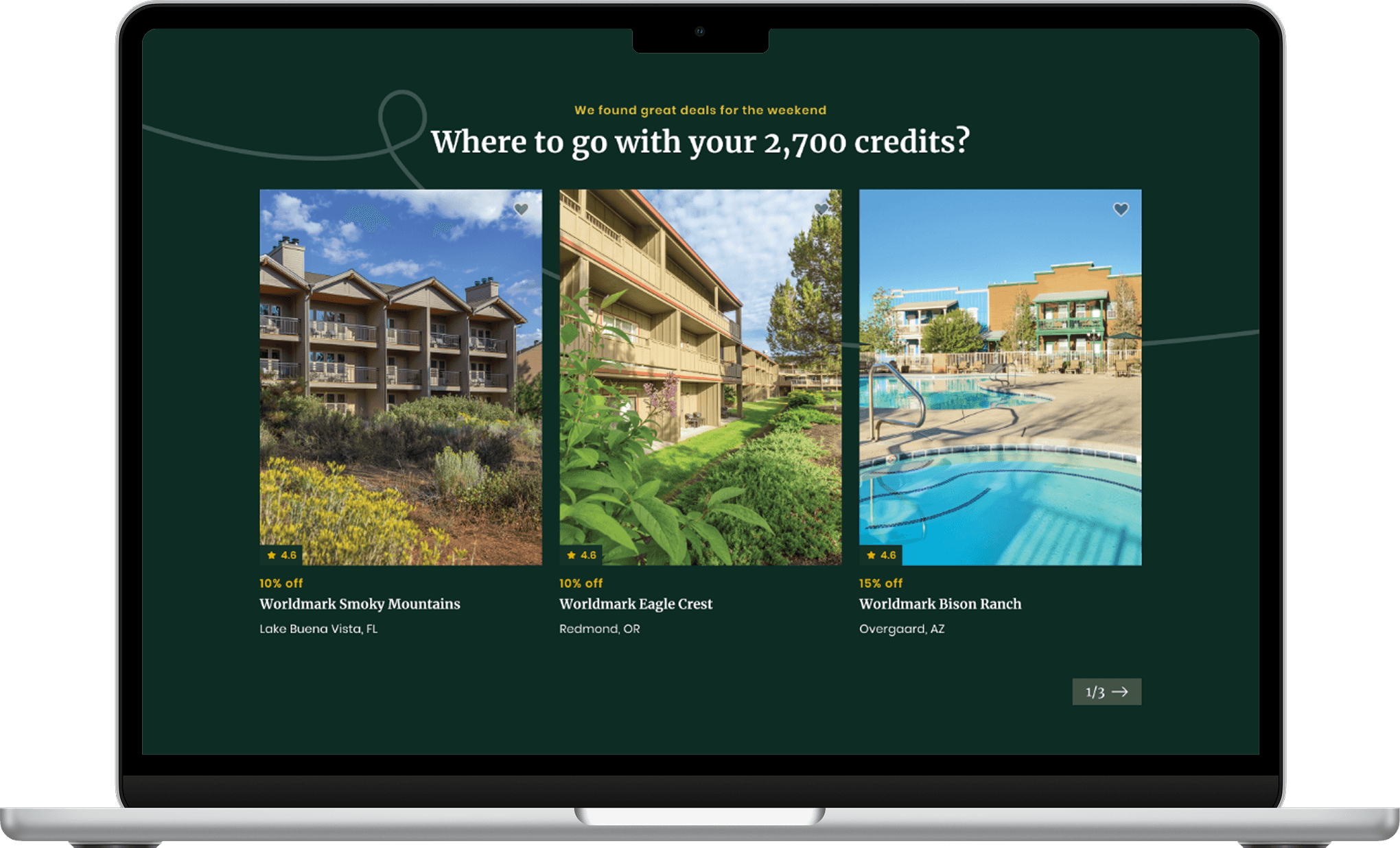
To make the experience more relevant and actionable, I introduced personalized entry points that leverage users’ credits and recent behavior to guide exploration and decision-making. The redesigned experience focuses on:
Highlighting recently viewed and searched destinations to help users resume their journey without starting over.
Surfacing bookable destinations based on available credits, so users immediately understand their options.
Using destination imagery to spark inspiration and re-engage users emotionally.
To make the experience more relevant and actionable, I introduced personalized entry points that leverage users’ credits and recent behavior to guide exploration and decision-making. The redesigned experience focuses on:
Highlighting recently viewed and searched destinations to help users resume their journey without starting over.
Surfacing bookable destinations based on available credits, so users immediately understand their options.
Using destination imagery to spark inspiration and re-engage users emotionally.
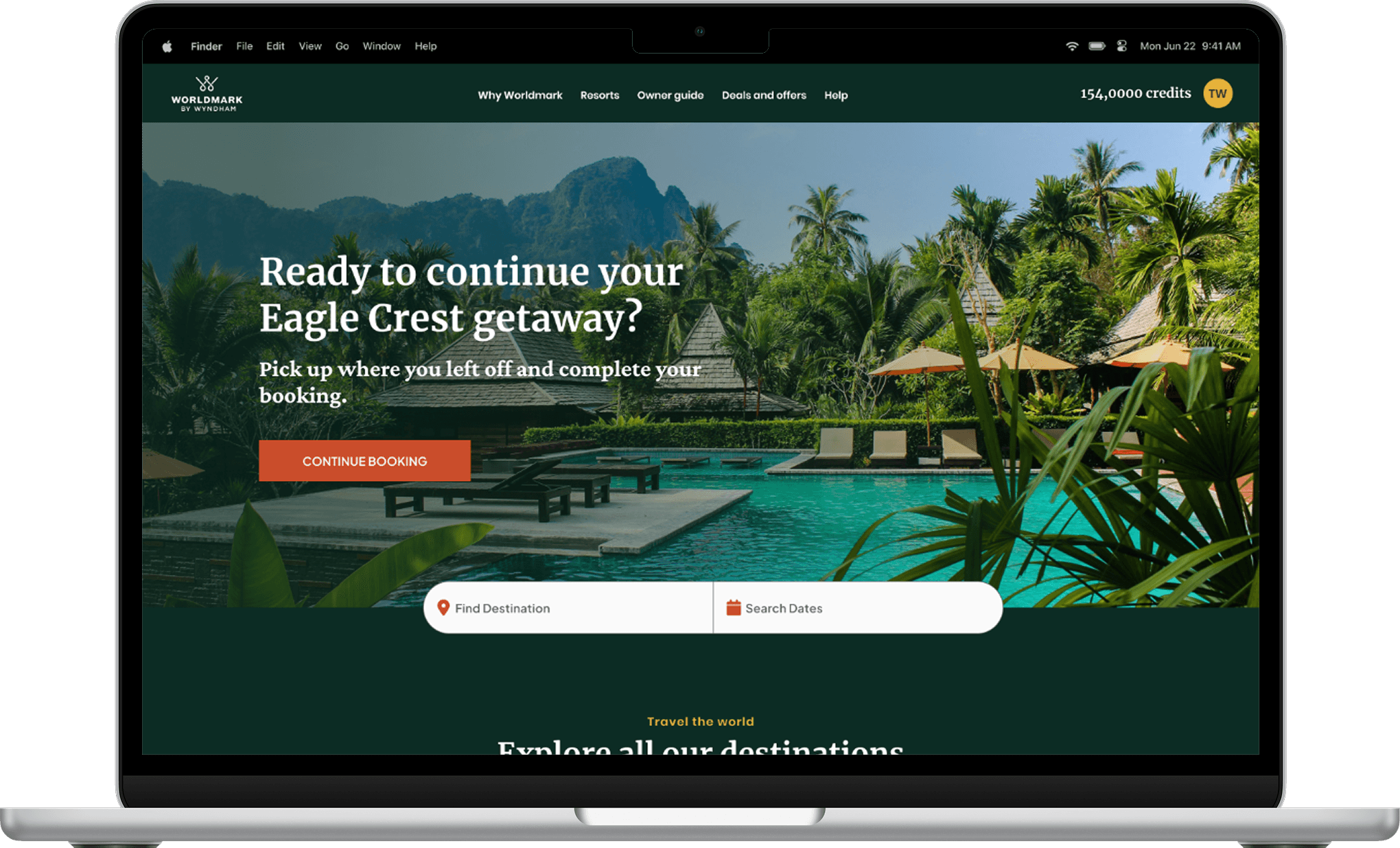
Redesign
Redesign
KEY TAKEAWAYS
KEY TAKEAWAYS
What I learned
What I learned
I am deeply grateful to the UX team for a summer full of growth and learning. Beyond sharpening my UX skills, I learned how to communicate effectively with product managers and developers. Most importantly, this experience taught me the value of collaboration and how diverse perspectives can inspire more meaningful user experiences. At the end of my internship, I presented my competitive research to the Chief Technology Officer of Travel + Leisure, alongside other leaders and interns. It was an incredible opportunity to highlight how a thoughtful user experience can both enrich users’ journeys and drive greater value for the company.
I am deeply grateful to the UX team for a summer full of growth and learning. Beyond sharpening my UX skills, I learned how to communicate effectively with product managers and developers. Most importantly, this experience taught me the value of collaboration and how diverse perspectives can inspire more meaningful user experiences. At the end of my internship, I presented my competitive research to the Chief Technology Officer of Travel + Leisure, alongside other leaders and interns. It was an incredible opportunity to highlight how a thoughtful user experience can both enrich users’ journeys and drive greater value for the company.
Thank you to every person I met during this amazing summer
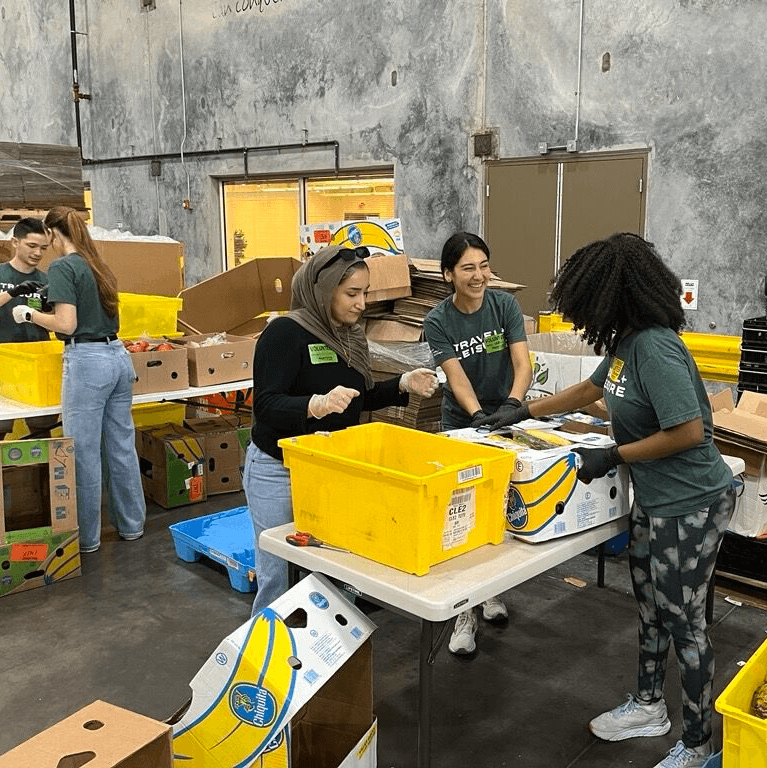
Thank you to every person I met during this amazing summer
Thank you to every person I met during this amazing summer
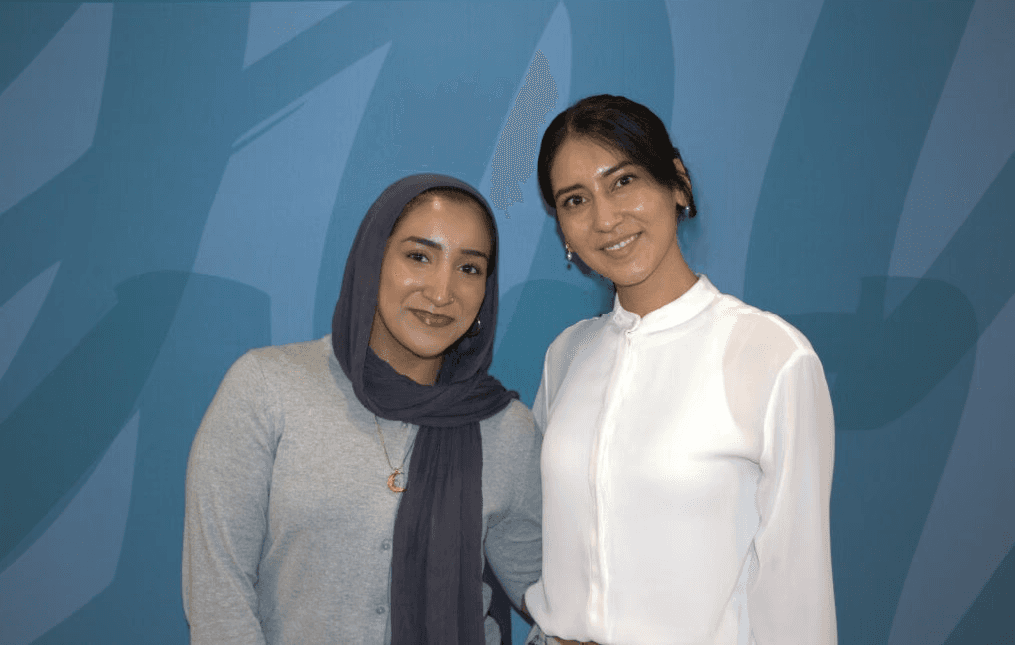
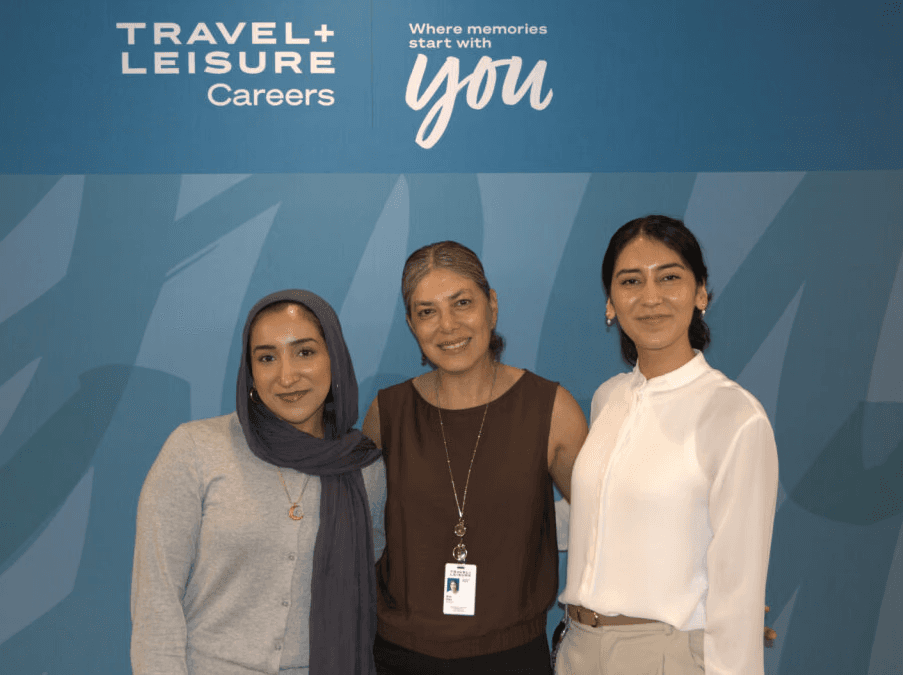
Especially to Ana & Trinidad, whose kindness and support made the experience unforgettable
Especially to Ana & Trinidad, whose kindness and support made the experience unforgettable
RECOMMENDATIONS
RECOMMENDATIONS
Director of UX at Travel + Leisure Co.
Director of UX at Travel + Leisure Co.

© Laura Suarez 2025
Company
Travel + Leisure Co.
Role
UX Design Intern
Timeline
Summer 2025
Tools
Figma, Generative AI